
Muslim Funeral Guide Singapore
Arranging a Muslim Funeral in Singapore
A practical guide for Muslim families on what to do when a loved one passes away, how to care for the jenazah, and what to expect before and after burial.
- 24-Hour Availability
- Islamic Rites Observed
- Serving Families since 2005
What To Do For Death at Homes

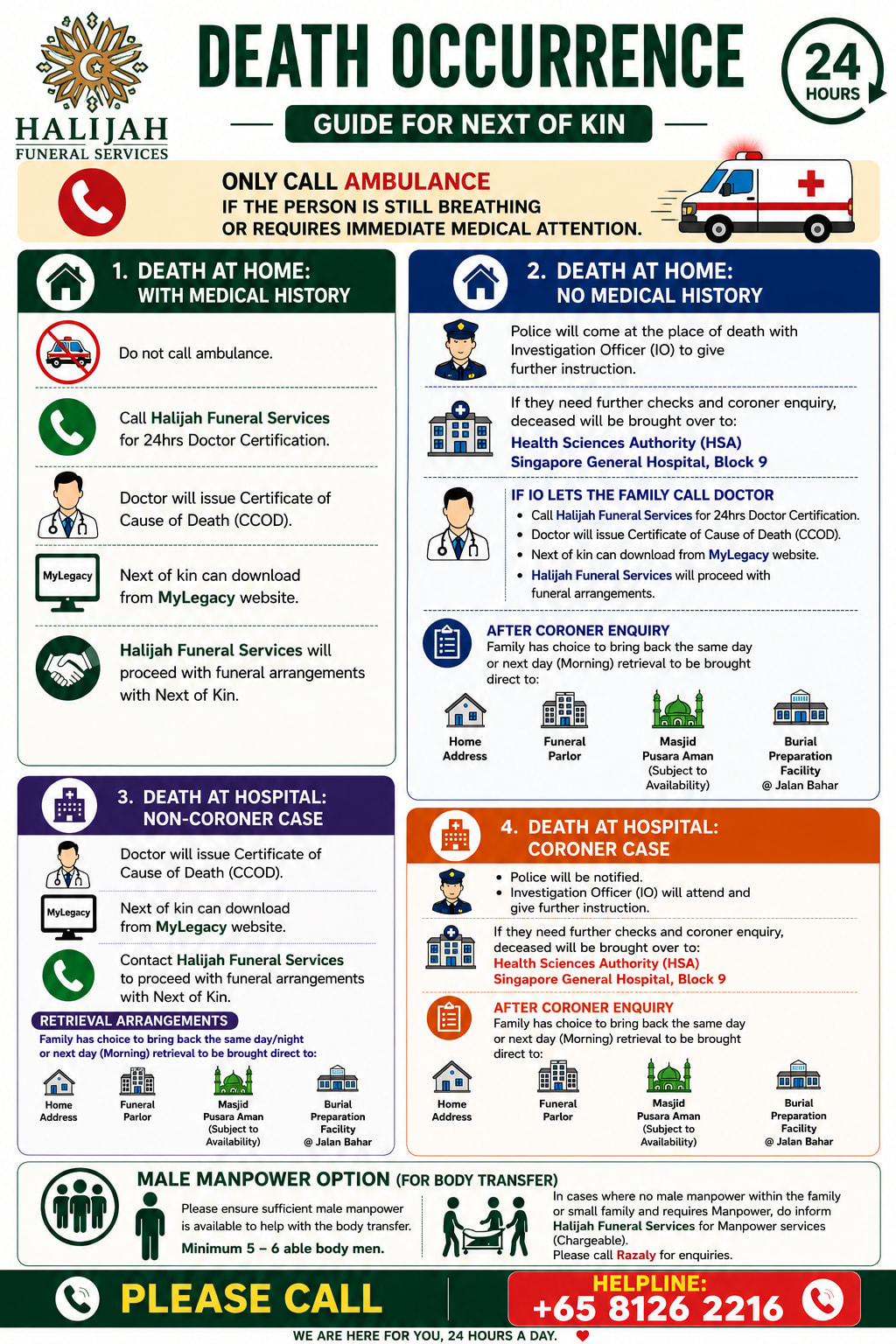
Death at Home with Medical History
If death occurs at home and the deceased has known medical history, an ambulance is usually not required unless the person is still breathing or needs urgent medical attention.
- Call Halijah Funeral Services for guidance on 24-hour doctor certification.
- The doctor will assess and issue the Certificate of Cause of Death (CCOD) where appropriate.
- The next-of-kin can download the death certificate from the MyLegacy website.
- We can then proceed with the Muslim funeral arrangements together with you.

Death at Home with No Medical History
If death occurs at home and the deceased had no known medical history, the police may attend to the place of death.
An Investigation Officer (IO) will provide further instructions.
- The police or IO will assess the situation and advise the family.
- If further checks or coroner enquiry is required, the deceased may be brought to the Health Sciences Authority (HSA) at Singapore General Hospital.
- If the IO allows the family to call a doctor, we can guide you on 24-hour doctor certification.
- Once the necessary clearance is given, we can proceed with the funeral arrangements.
The family may usually have the option to bring the deceased back on the same day or the next morning, depending on instructions and readiness.
The jenazah may then be brought directly home, to a funeral parlour, to Pusara Aman mosque subject to availability, or to the burial preparation facility at Jalan Bahar.
What To Do For Death at Hospitals
Death at Hospital - Non-Coroner Case
If death occurs in hospital and the case is not referred to the coroner, the hospital doctor will usually issue the Certificate of Cause of Death (CCOD).
- The doctor issues the CCOD.
- The next-of-kin can download the death certificate from the MyLegacy website.
- The family can contact us to proceed with funeral arrangements.
- Retrieval may be arranged for the same day or the next morning, depending on the family’s preference and operational readiness.
The jenazah may then be brought directly home, to a funeral parlour, to Pusara Aman mosque subject to availability, or to the burial preparation facility at Jalan Bahar.

Death at Hospital - Coroner Case
If the hospital identifies the case as a coroner case, the police will be notified and an Investigation Officer (IO) will attend to provide instructions.
- The police or IO will guide the family on the next steps.
- If further checks or coroner enquiry is required, the deceased may be brought to Health Sciences Authority (HSA) at Singapore General Hospital.
- After the coroner enquiry, the family may usually arrange retrieval on the same day or the next morning, depending on instructions and readiness.
- We can guide the family once clearance is given.
The jenazah may then be brought directly home, to a funeral parlour, to Pusara Aman mosque subject to availability, or to the burial preparation facility at Jalan Bahar.
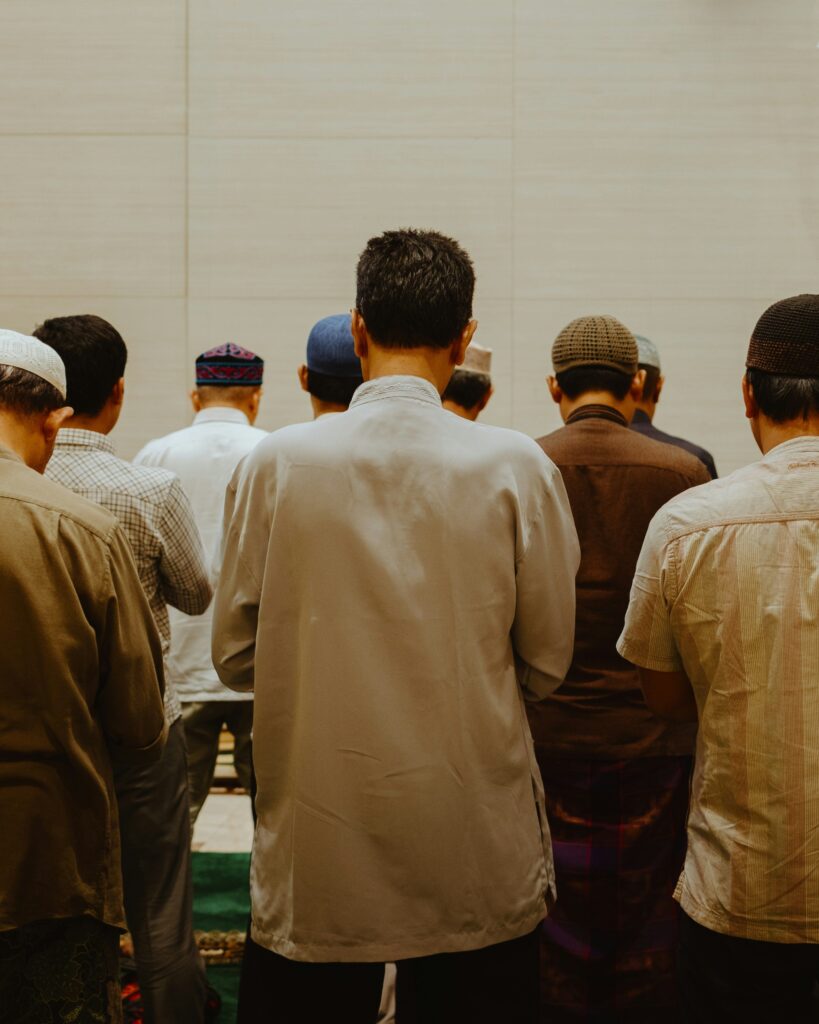
Body Transfer Support
Male Manpower for Body Transfer
It is vital for families to ensure there is sufficient male manpower available to assist with body transfer where required. As a general guide, a minimum of 5 to 6 able-bodied men may be needed.
If your family does not have enough male manpower available, Halijah Funeral Services can provide manpower support, subject to availability.
How to Care for the Jenazah When Brought Home
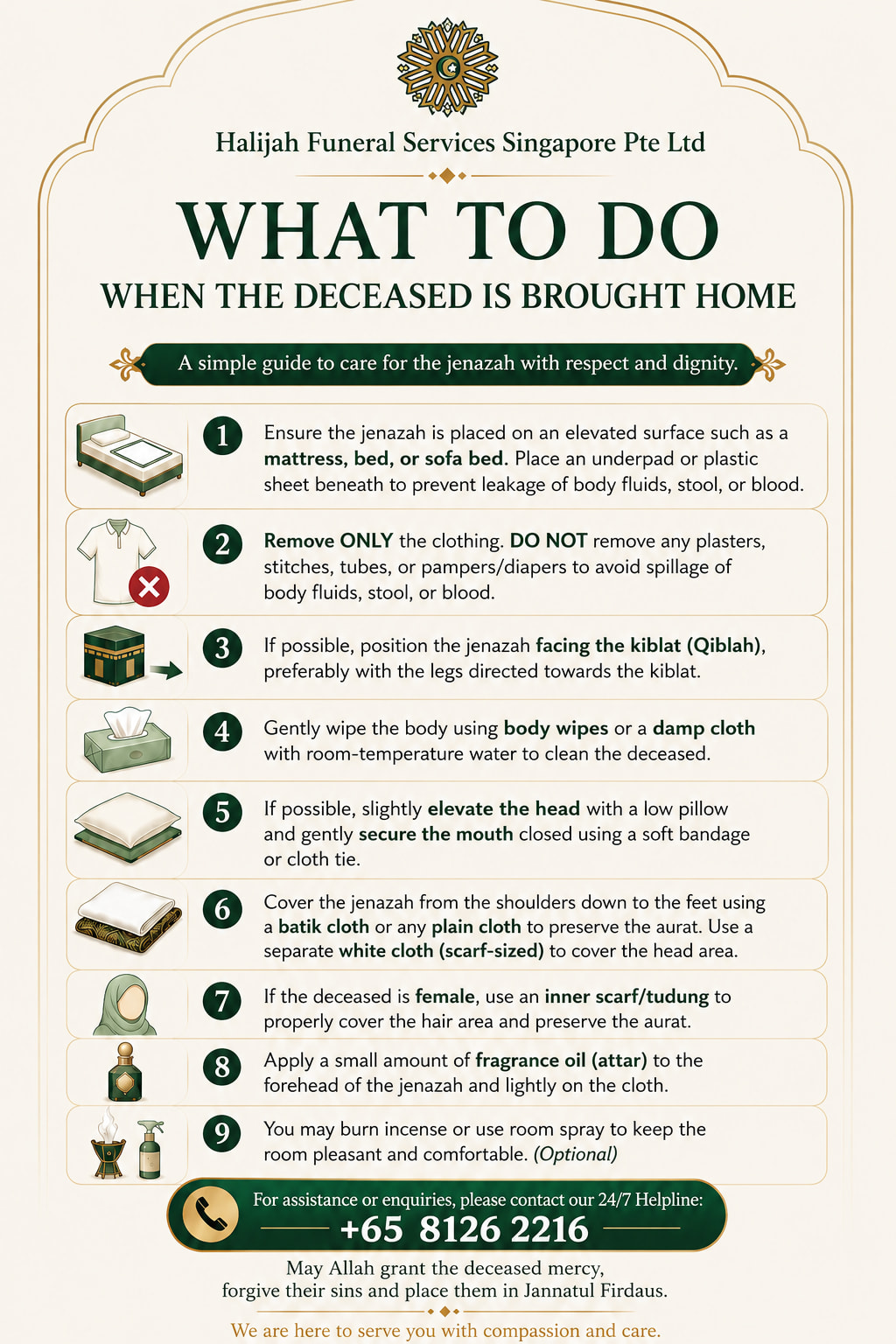
If the jenazah is brought home before washing and burial preparation, the family may take simple steps to preserve dignity, cleanliness and aurat while waiting for the next arrangements.
Guidance Checklist

Step 1
Place the jenazah on an elevated surface such as a mattress, bed or sofa bed.

Step 2
Place an underpad or plastic sheet beneath the jenazah to prevent leakage of body fluids, stool or blood.

Step 3
Remove only the clothing. Do not remove plasters, stitches, tubes or diapers, as this may cause spillage of body fluids, stool or blood.

Step 4
If possible, position the jenazah facing the Qiblah, preferably with the legs directed towards the Qiblah.

Step 5
Gently wipe the body using body wipes or a damp cloth with room-temperature water.

Step 6
If possible, slightly elevate the head with a low pillow and gently secure the mouth closed using a soft bandage or cloth tie.

Step 7
Cover the jenazah from the shoulders down to the feet using a batik cloth or any plain cloth to preserve the aurat.

Step 8
Use a separate white cloth, around scarf size, to cover the head area. If the deceased is female, use an inner scarf, or tudung, to properly cover the hair area and preserve the aurat.

Step 9
Apply a small amount of fragrance oil, or attar, to the forehead of the jenazah and lightly on the cloth.

Optional
you may burn incense or use room spray to keep the room pleasant and comfortable.
Important Note:
If you are unsure what should or should not be done, wait for guidance from us or your appointed funeral team. Avoid removing medical items such as tubes, plasters, stitches or diapers unless advised.
Guidance Through Every Step
How Halijah Funeral Services Can Support Your Family
When a loved one passes away, families may not know what to do first.
We provide Muslim funeral guidance and practical support so families are not left to manage the process alone.
We can assist with:
- Doctor certification guidance where applicable
- Retrieval of the jenazah from home, hospital, hospice or mortuary
- Adult Muslim funeral preparation
- Burial coordination and cemetery arrangements
- Manpower support
- Child, infant and foetus funeral management
- International repatriation
- After-service support
Unsure What to Do Next?
We are available 24/7 to guide Muslim families in Singapore with care, clarity and respect.
How can we help?
We’ll respond within minutes, any time of day or night.
What Families Ask Us
Frequently Asked Questions
First, check whether the person still needs urgent medical attention. If the person is still breathing, call an ambulance. If death has occurred, identify whether it happened at home or in hospital, and whether the deceased had medical history.
If you are unsure what to do, contact us at +65 8126 2216 and we will guide your family on the next step.
Only call an ambulance if the person is still breathing or requires immediate medical attention. If death has already occurred at home and the deceased had known medical history, you may contact us for guidance on 24-hour doctor certification and funeral arrangements.
If death occurs at home and the deceased has no known medical history, the police may attend to the place of death. An Investigation Officer will provide further instructions. If further checks or coroner enquiry is required, the deceased may be brought to HSA at Singapore General Hospital.
CCOD stands for Certificate of Cause of Death. It is issued by a doctor when the cause of death can be certified. Once the CCOD is issued, the next-of-kin can download the death certificate from the MyLegacy website.
The jenazah should be placed respectfully on an elevated surface with an underpad or plastic sheet beneath. Families should preserve the aurat, gently clean the body where appropriate, avoid removing medical items such as tubes or plasters, and wait for guidance from the funeral team if unsure.
As a general guide, families should prepare at least 5 to 6 able-bodied men to assist with body transfer where required. If there is not enough male manpower available, HFS can provide manpower support, subject to availability.